System
What is Jyotish?
Draft — page expanding
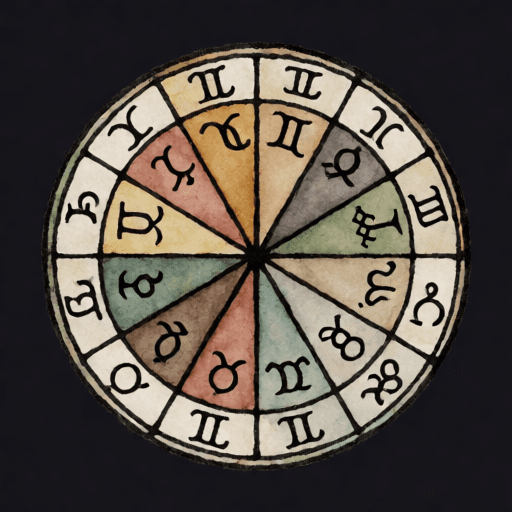
Jyotish (jyotiṣa, “the science of light”) is the classical Indian astrological system, read on the sidereal zodiac — corrected by the ayanāṃśa for the precession of the equinoxes — and codified in the Brihat Parashara Hora Shastra. It is karmic and time-aware: a birth moment becomes a Rashi (the Moon sign, the mind’s home), a Lagna (the Ascendant, the body and self’s seat), the nine Navagrahas placed through the twelve Bhava houses, and a Nakshatra position (one of 27 lunar mansions, the Moon’s emotional texture). Timing comes in two motions: the Vimshottari Dasha, a 120-year planetary cycle that sets the decade’s theme, and the Gochara, daily transits that activate a specific house. The five Mahabhutas add the elemental weather. In Divination Nexus Jyotish is the karmic-relationship layer — mind, decade, and today’s activation — and the structural parent of both the Kundli (the fixed chart) and the Panchang (the day’s almanac).
What job does it do?
Chart, Today, When. Epistemic badge: constitutional.
What is traditional, and what is our interpretive layer?
Traditional: the sidereal zodiac with ayanāṃśa correction, the twelve Rashi and Bhava, the nine Navagrahas, the 27 Nakshatras, and the Vimshottari Dasha as the timing system — the classical Jyotish structures. Interpretive: the Divination Nexus layer that reads Jyotish as a karmic-relationship layer paired with the 12 Alignment Dimensions, and maps its elements and houses onto chakras and crystals as cross-system associations, not doctrine.
Traditional mechanic, tables, and named sources live in the vault file Celestial-Jyotish.md.
What is it not?
It is not a tropical Western natal wheel. It is not a fake cast from a date unless the engine is honestly computational. Harm-capable historic verdicts are documented, not performed.